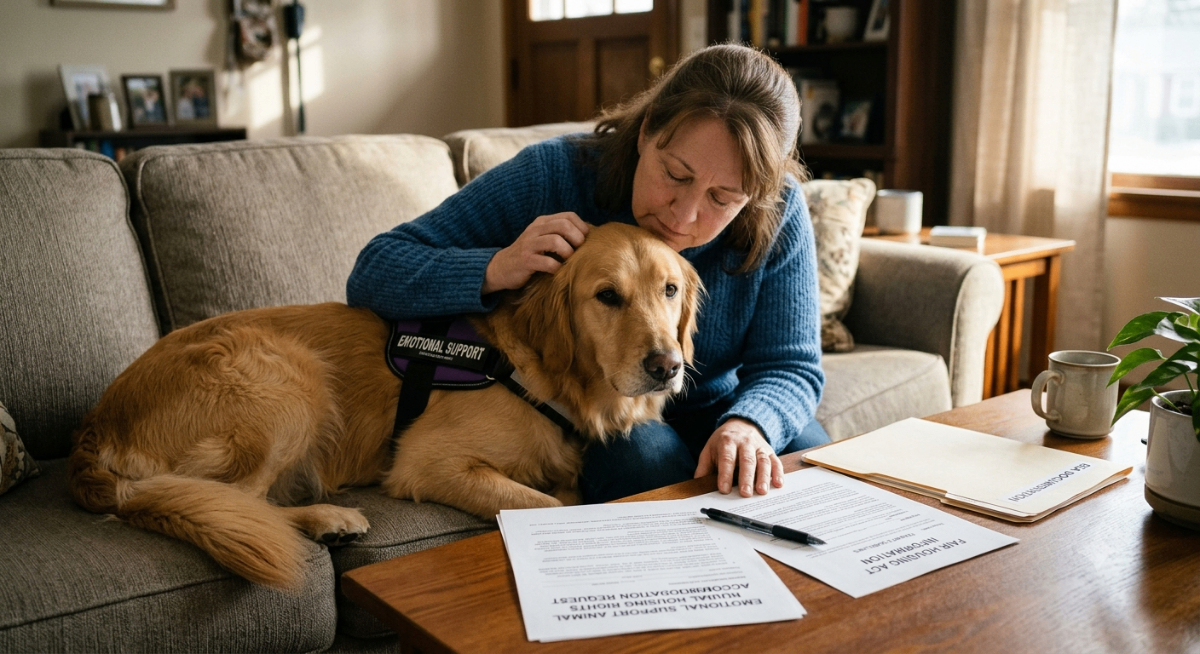
Can a Landlord Reject an ESA Letter from an Online Provider? Understanding Your Rights
The rise of online services has made obtaining an Emotional Support Animal (ESA) letter more accessible than ever. However, a common concern among individuals seeking housing with their emotional support animals is whether a landlord can legally reject an ESA letter obtained through an online provider. This question touches upon crucial aspects of federal housing laws, the legitimacy of online mental health services, and the rights of both tenants and landlords.
Understanding the legal framework governing ESAs in housing is paramount. The Fair Housing Act (FHA) prohibits discrimination against individuals with disabilities, including those who require an assistance animal for therapeutic benefit. This protection extends to emotional support animals, which alleviate symptoms of a mental or emotional disability. For a landlord to accommodate an ESA, the tenant typically needs to provide a legitimate letter from a licensed mental health professional (LMHP) verifying the disability and the need for the animal.
Need an ESA Letter Today?
Don't let landlord restrictions stress you out. Get your ESA letter for housing in 24 hours.
Apply for ESA LetterThe Legitimacy of Online ESA Letters
The core issue often revolves around the perceived legitimacy of an ESA letter obtained online. Landlords might be skeptical, fearing that such letters are not authentic or do not come from a qualified professional. However, federal guidelines, specifically those from the Department of Housing and Urban Development (HUD), do not differentiate between letters obtained in-person or online, as long as the provider meets certain criteria.
A legitimate online ESA letter must come from a licensed mental health professional who is qualified to make such an assessment and who has established a therapeutic relationship with the individual. This means the professional must be licensed in the state where the patient resides and must have conducted a proper evaluation to determine the need for an ESA. Simply paying for a letter without a genuine assessment is not considered legitimate.
What Makes an ESA Letter Valid?
For an ESA letter to be considered valid and legally binding under the FHA, it must contain specific information:
- It must be on the letterhead of a licensed mental health professional (e.g., psychiatrist, psychologist, therapist, social worker).
- It must state that the individual has a disability (without disclosing the specific diagnosis, if preferred).
- It must affirm that the emotional support animal is necessary to provide emotional support that alleviates one or more symptoms or effects of the disability.
- The professional must be licensed and include their license number and the state in which they are licensed.
Landlords are generally not permitted to inquire about the specific details of a tenant's disability or demand medical records. Their inquiry is limited to verifying the disability-related need for the assistance animal, which the ESA letter serves to do. For comprehensive guidance on understanding your ESA housing rights, it's beneficial to review detailed resources.
Landlord's Rights and Limitations Regarding ESA Letters
While landlords must accommodate legitimate ESAs, they do have certain rights. They can verify the authenticity of the letter by contacting the licensed professional who wrote it, provided the tenant has given consent. However, they cannot demand specific forms or additional documentation beyond what is necessary to establish the disability and the animal's necessity. For instance, a landlord demanding their own ESA form is generally not permissible if a valid letter has already been provided.
A landlord cannot reject an ESA letter solely because it was obtained online if the letter otherwise meets all federal requirements and comes from a qualified, licensed professional. Doing so could be considered a violation of the Fair Housing Act. The crucial element is the legitimacy of the assessment and the professional's credentials, not the medium through which the service was provided.
Common Reasons for Rejection (and How to Counter Them)
Landlords might attempt to reject an ESA letter for several reasons:
- Skepticism about online providers: Many landlords are simply unfamiliar with telehealthcare and assume online letters are inherently fake. Counter this by emphasizing the professional's license and the validity of the assessment process.
- Lack of an ongoing therapeutic relationship: Some landlords argue that the FHA requires a long-term, in-person relationship. HUD guidance, however, clarifies that while a relationship is necessary, it doesn't specify a duration or in-person requirement, especially with the prevalence of telehealth.
- Demanding specific information: As mentioned, landlords cannot demand a specific diagnosis or excessive medical details.
If you encounter resistance, it's important to know your rights. You can refer your landlord to official HUD guidance on assistance animals, which explicitly addresses these points. Resources like navigating housing with an ESA can offer further support in these situations. Furthermore, a PetCerts.com Verified ESA Letter helps pass corporate landlord screens by providing an extra layer of verification for landlords.
Protecting Your Rights
If your landlord rejects your legitimate ESA letter, especially one obtained online from a qualified professional, you have several avenues for recourse. You can:
- Educate your landlord: Provide them with copies of HUD's guidance on assistance animals, which clearly outlines their obligations under the Fair Housing Act.
- Seek legal advice: Consult an attorney specializing in fair housing laws.
- File a complaint: You can file a complaint with HUD or your local fair housing authority.
It's vital to ensure that your ESA letter is indeed legitimate and provided by a licensed professional who conducted a proper evaluation. For any enterprise or clinical support questions, you can contact PetCerts.com for assistance.
Conclusion
A landlord cannot legally reject an ESA letter solely because it was obtained from an online provider, provided that the letter is legitimate, issued by a licensed mental health professional, and meets all federal requirements under the Fair Housing Act. The focus should always be on the validity and content of the letter, not the medium through which the assessment was conducted. By understanding your rights and ensuring your documentation is impeccable, you can confidently advocate for your emotional support animal and secure your housing.
Ready to Live Peacefully with Your ESA?
Join thousands of happy pet owners who secured their housing rights with PetCerts.
Start Your Assessment